The Vanderbijlpark school transport tragedy exposes the cost of inaction and weak enforcement
By Katy Katopodis
“Enough is enough.” We utter those words far too often in this country.
We express devastation and shock. We call for accountability. And we do so in response to a myriad of crises, over and over again. Today, we said it once more.
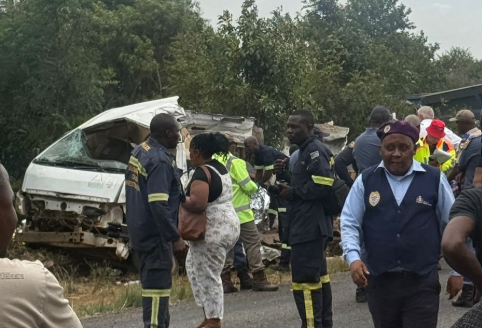
Fourteen children, on their way to school, were killed in a horrific accident in Vanderbijlpark. A headline so devastating it stopped the country in its tracks.
According to eyewitnesses at the scene, the driver of the scholar transport vehicle attempted to overtake as many as five cars at high speed.
An oncoming truck was approaching. Those children stood no chance. They were unwilling participants in someone else’s deadly game of Russian roulette.
What makes this tragedy even more difficult to comprehend is what followed.
The vehicle was overloaded. Reports have since emerged that the driver had a history of reckless driving. Gauteng Education MEC Matome Chiloane confirmed that the driver had been warned about his behaviour just last week.
So the question must be asked. What happened next?
It is now painfully clear that a warning was not enough. It is equally clear that the keys to that vehicle should have been confiscated immediately. But they were not. No one intervened. No one stood up to the road bully. Instead, he was allowed to continue driving.
And the result was inevitable. Tragedy. Thirteen families are now in mourning.
Families who waved goodbye on what should have been an ordinary Monday morning school run in January are now faced with identifying their children’s bodies and planning their funerals.
Like many others, I watched in shock and heartbreak as panic-stricken parents arrived at the scene and collapsed in grief. It is an image that should never have been broadcast.
The decision by television cameras to keep rolling, and to zoom in on raw human anguish, is in itself a travesty and an editorial boundary crossed. That, however, is a discussion for another day.
This brings us to the real question. When is “enough” ever truly enough? And when will we stop paying lip service to issues of this gravity?
When will authorities finally put a stop to industry operators who behave as though they own our roads and who, with one reckless decision, destroy lives?
Let this not become just another tragedy consigned to the archive of our national grief. Warnings were given. Risks were known. And yet nothing decisive was done.
This was not fate. It was failure. Failure to enforce, to intervene and to protect.
If “enough” is ever to mean anything in this country, it must mean consequences. Real ones. Immediate ones. Because once again, the cost of inaction has been paid by children.
Katy Katopodis: Editor-in-Chief

Katy is a highly experienced, award-winning journalist and editor with a career spanning over two decades.
She is the chairperson of the South African National Editors’ Forum’s (SANEF) Journalism Safety and Wellness Committee and the Editor-in-Chief of Kaya News and Talk.
Read Next: A year that tested the nation: How Kaya News navigated political landmines and tragedy
The post This was not fate. It was failure, and 14 children died appeared first on KAYA 959.